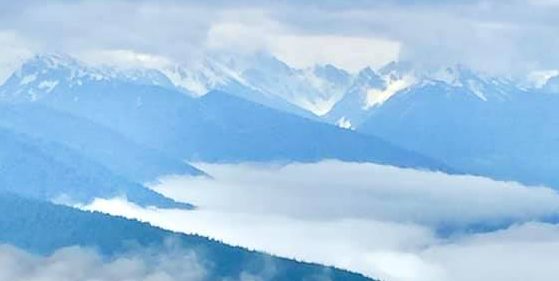
Welcome to Crater Lake National Park
Welcome to the Crater Lake National Park Information Page
Here you will find all you need to know about the natural history of the park.
Learn about the geology, trees, mammals, birds, or other plants and wildlife of the area.
Crater Lake National Park is located in southern Oregon on the crest of the Cascade Range, 100 miles from the Pacific coast
Getting There
The closest major airport to Crater Lake National Park is the Rogue Valley International-Medford Airport (MFR) which is 75 miles Northwest of the park.
There is an airport at Klamath Falls, OR which is 60 miles South of the park.
There is an airport at Medford, OR which is 80 miles Southwest of the park.
From the North
1. Take I-5 South to Eugene, OR take Stateroad 58 East to Highway 97 to Stateroad 138 to the park.
2. Take I-5 South to Roseburg, OR take Stateroad 138 East to the park’s north entrance.
3. From Roseburg, OR – Stateroad 138 East to the park’s north entrance.
4. From Bend, OR – Highway 97 South to Stateroad 138 west to the park’s north entrance.
*The park’s north entrance is typically closed for the winter season from mid-October to Mid-June.
From the South
1. Take I-5 North to take Stateroad 62 North to the park’s west entrance or to Stateroad 230 North to Stateroad 138 to the north entrance.
2. From Klamath Falls, OR – Highway 97 North to Stateroad 62 North to the park’s south entrance.
From the West
Head for I-5 North or South and follow the North and South directions to the park.
From the East
Head for I-5 North or South or Highway 97 North or South and follow the directions for North or South to the park.
Establishment the Crater Lake National Park
President Theodore Roosevelt signed the bill on 22 May 1902 for Crater Lake National Park to become nation’s fifth oldest park.
Size and Visitation of Crater Lake National Park
Acreage – as of September 23, 2000
Federal Land – 183,223.77
Non-Federal Land – .28
Gross Area Acres – 183,224.05
Visitation – 1999
Total Recreation Visits – 417,992
About a half million people visit the park each year, with Jul and Aug being the busiest months.
History of Crater Lake National Park
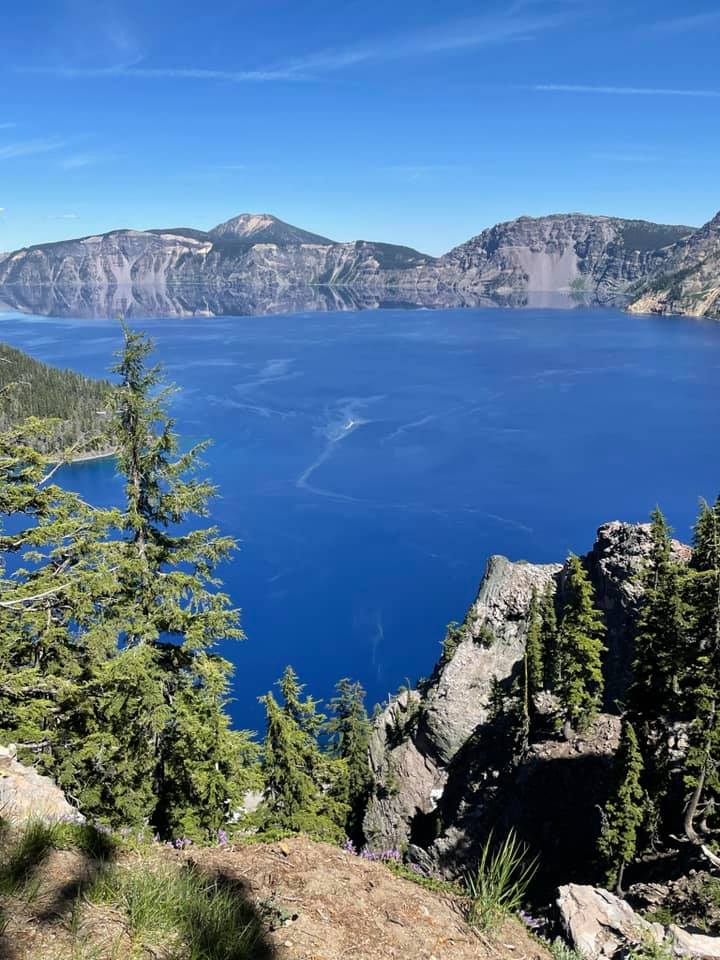
The Klamaths revered the lake and the surrounding area, keeping it undiscovered by white explorers until 1853. That year, on June 12, three gold prospectors, John Wesley Hillman, Henry Klippel, and Isaac Skeeters, came upon a long, sloping mountain. Upon reaching its highest point, a huge, awe-inspiring lake was visible. “This is the bluest lake we’ve ever seen,” they reported, and named it Deep Blue Lake. But gold was more on the minds of settlers at the time and the discovery was soon forgotten.
Captain Clarence Dutton was the next man to make a discovery at Crater Lake. Dutton commanded a U.S. Geological Survey party which carried the Cleetwood, a half-ton survey boat, up the steep slopes of the mountain then lowered it to the lake. From the stern of the Cleetwood, a piece of pipe on the end of a spool of piano wire sounded the depth of the lake at 168 differnt points. Dutton’s soundings of 1,996 feet were amazingly close to the sonar readings made in 1959 that established the lake’s deepest point at 1,932 feet.
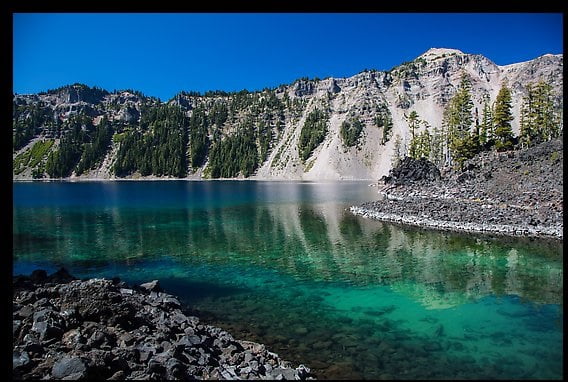
Deep blue lakes can be as regal as gold. The caldera lakes are serene and mysterious, and visitors will feel as if they are in a wonderland.
When they leave, the custom keychains serve as a special memento of the beauty of the lakes, engraved with the beauty of the lakes, and carry the traveler’s memories of the time spent at the lakes.
Facts and Figures
- Crater Lake is the deepest lake in the United States
- The second deepest lake in the Western Hemisphere
- The seventh deepest lake in the world
- Maximum lake depth: 1932 feet
- Average lake depth: 1500 feet
- Maximum lake width: 6 miles
- Lake surface elevation: 6176 feet
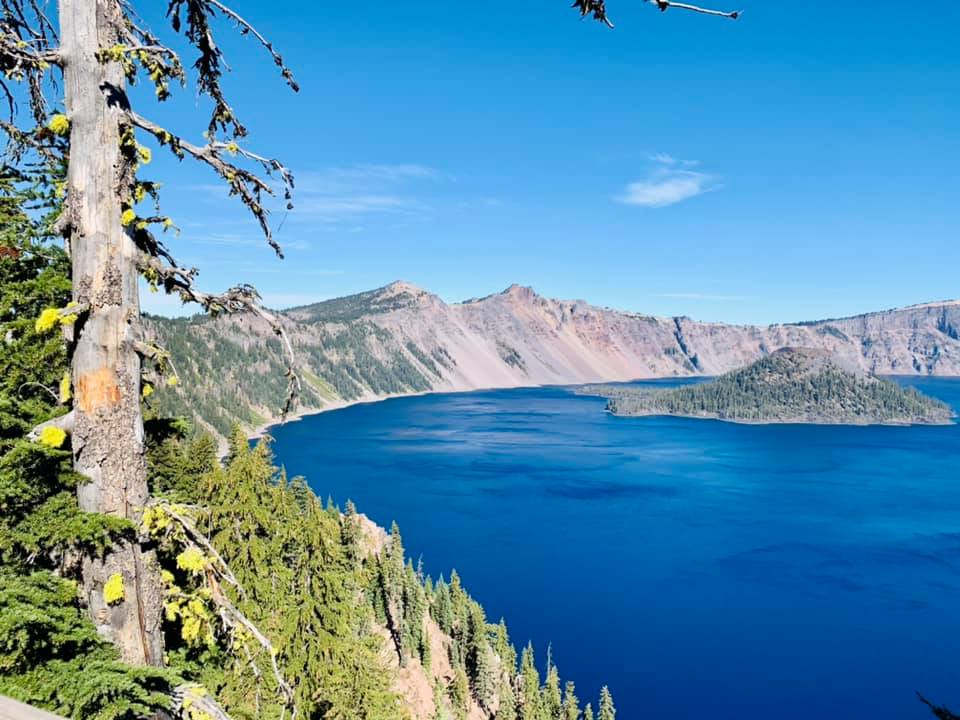
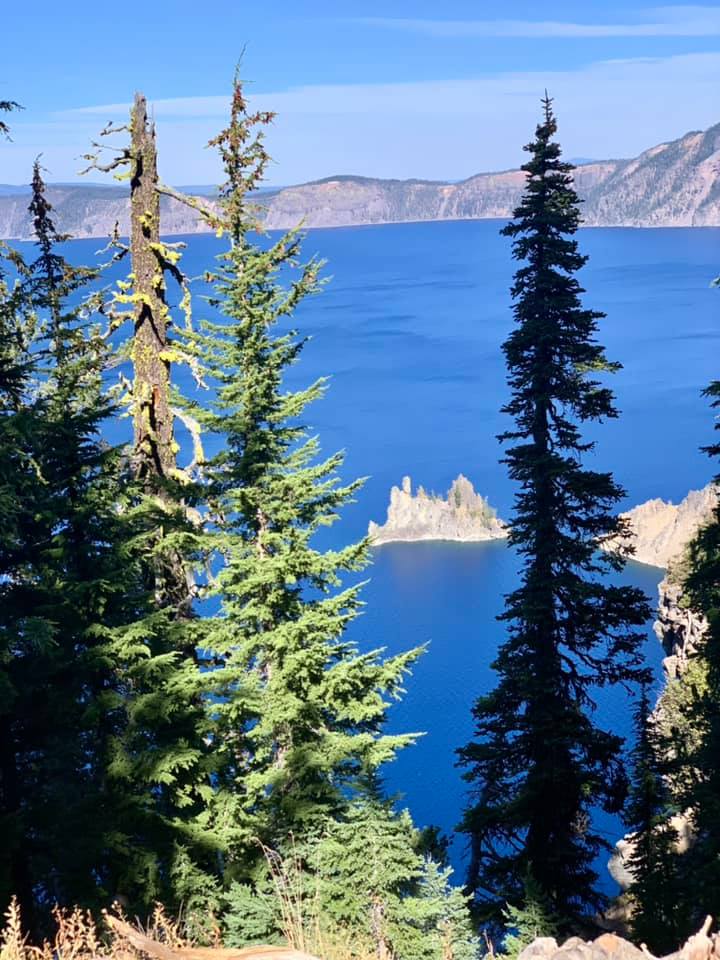
- Wizard Island elevation: 6940 feet
- Wizard Island height above water: 764 feet
- Hillman Peak, highest point on rim: 8151 feet
- Mount Scott, highest point in park: 8929 feet
- Union Peak: 7709 feet
- Rim Village elevation: 7100 feet
- Precipitation, yearly average: 66 inches
- Snowfall, yearly average: 44 feet
- Maximum snow depth at Park Headquarters: 21 feet
- Park Size: 183224 acres
Accessibility
Campsites are available at the Mazama Campground. The visitors centers and Crater Lake Lodge are accessible. When the 33-mile Rim Drive is open during the summer, there are more than 20 Crater Lake overlooks which are accessible.
Backcountry Hiking
All backcountry trails should be regarded as strenuous. Appropriate planning, including practice of Leave No Trace techniques, should be considered for all backcountry expeditions.
Backcountry permits are required for overnight snow camping. Free permits are required for anyone wishing to camp overnight in the backcountry. Permits are available at both park visitor centers.
Biking
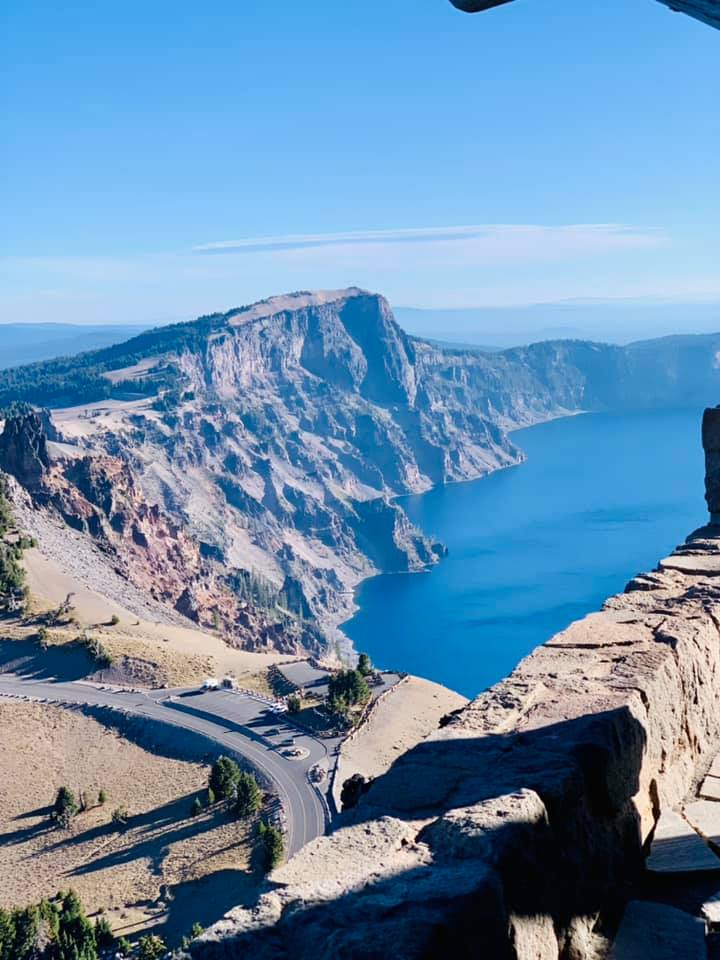
Each year, increasing numbers of cyclists come to Crater Lake National Park to ride around the lake on the 33-mile Rim Drive. The route is physically demanding. Steep hills at high elevation may encourage even the most fit riders to pause at many of the road’s thirty overlooks and pullouts. The payoff, however, is spectacular scenery, seen at a pace that few visitors choose to take enough time for.
Bus Tours
Crater Lake National Park offers ranger-led programs for bus tours on a staff-available basis.
Camping and Fires
There are two campgrounds inside Crater Lake National Park.
Entrance Fees
- Individual Entry (Vehicle) $20.00 – 30.00 (Seven Day Pass)
- Individual Entry (bike, foot) $15.00 (Seven Day Pass)
- Gold Access Pass (Blind or permanently disabled individuals) Free (Lifetime – good in all natl parks)
- Golden Age Pass (1 time fee – for those 62+ years young) $ 10.00 (Lifetime – good in all natl parks)
- National Park Pass (good 1 year from date of purchase) $ 55.00 (good in all natl parks)
- Golden Eagle Pass (good 1 year from date of purchase) $ 15.00 (good in all natl parks & forests)
To update entrance fees, you visit this page
Fishing
Fishing is allowed from May 20 through Oct 31; however, the lake can be fished year round except when seasonal limitations prevent safe access.
Food and Supplies
The Mazama Village complex operates a camper store from June through September, with laundry, showers, and gasoline available as well. There is no gasoline available from November through late May.
Hiking
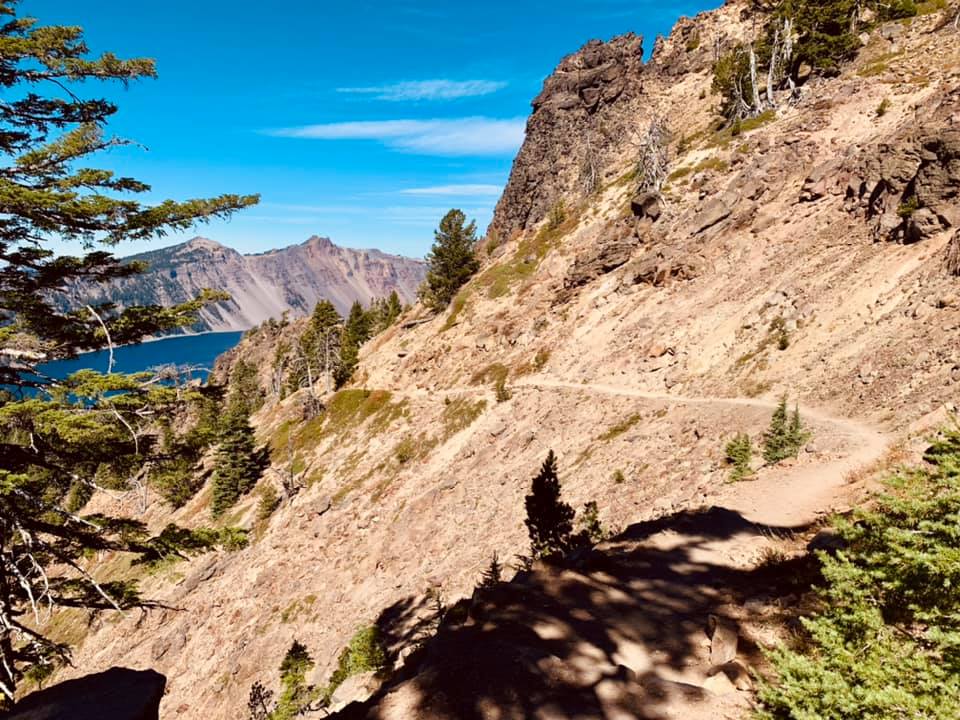
In Crater Lake National park, there are over 90 miles of one-way and loop trails, including 33 miles of the Pacific Crest Trail as well as hikes up Mount Scott, Garfield Peak, and Crater Peak. It is also possible to hike to the lake surface on the Cleetwood Trail.
Lodging
Lodging in Crater Lake National Park is limited to two facilities and two campgrounds. The two lodging facilities are Crater Lake Lodge and Mazama Village Motor Inn.
Permits and Reservations
Permits are required for all backcountry camping in the park and are issued free of charge at visitor centers.
Reservations are not taken for camper/tent sites, however, they are strongly urged for rooms at the Crater Lake Lodge and the Motor Inn.
Reservations may be made for organized group interpretive tours in the summer and on the weekends in the winter season by calling visitor information. Educational groups can make reservations for weekdays during the school season.
Pet Information
Pets are allowed in the park but are strictly regulated. Pets are allowed in the campgrounds. Pets must be on a leash at all time while in the park. Pets cannot be left unattended, and pets are not permitted on trails.
Visitor Centers
Steel Information Center
This visitor center is located at park headquarters on the south side of the park and is open year round. A park ranger or volunteer is on duty to assist with park information, trip planning, weather forecasts, and backcountry camping permits. Informational materials, including the seasonal newspaper Crater Lake “Reflections”, can be mailed to prospective visitors upon request. An 18 minute video, The Crater Lake Story, is shown every half hour in the summer, and upon request in the winter. Books, maps, posters, and educational materials are available for purchase from the Crater Lake Natural History Association, a non-profit group which supports interpretation, scientific research, and development of park publications. Public restrooms and a post office are located in this building as well.
The Steel Visitor Center
Open all year
Hours
Nov – Mar 10:00 am – 4:00 pm – Daily (except Christmas Day)
Mar – Nov 9:00 am – 5:00 pm – Daily
Post Office Hours
Monday through Saturday – 9:00 am – 12:00 pm and 1:00 pm – 3:00 pm, except holidays.
Weather of Crater Lake National Park
Crater Lake National Park, located in southern Oregon, experiences varied weather conditions throughout the year due to its high elevation and mountainous terrain. Here’s a general overview of the weather you might encounter:
- Summer (June to August):
- Daytime temperatures typically range from 60°F to 70°F (15°C to 21°C) at higher elevations.
- Nights can be chilly, with temperatures dropping to 40°F to 50°F (4°C to 10°C).
- Summer is the driest season, with clear skies and minimal precipitation. However, afternoon thunderstorms are possible, especially in July and August.
- Fall (September to November):
- Temperatures start to cool down gradually.
- Daytime temperatures range from 40°F to 60°F (4°C to 15°C).
- Nights become colder, with temperatures dropping to 30°F to 40°F (-1°C to 4°C).
- Fall foliage in the surrounding forests makes for picturesque scenery.
- Winter (December to February):
- Winter brings heavy snowfall to Crater Lake, with the park receiving an average of 44 feet (13 meters) of snow annually.
- Daytime temperatures range from 20°F to 40°F (-7°C to 4°C).
- Nighttime temperatures often drop below freezing, ranging from 10°F to 20°F (-12°C to -6°C).
- Snowstorms and icy conditions are common, and road closures may occur.
- Spring (March to May):
- Snow begins to melt, leading to increased water levels in the lake.
- Daytime temperatures gradually warm up, ranging from 30°F to 50°F (-1°C to 10°C).
- Nights remain cold, with temperatures ranging from 20°F to 30°F (-7°C to -1°C).
- Spring brings rain showers and occasional snow showers as the park transitions to warmer weather.
